Buffalo Heat Health
Recent predictions by meteorological centers in the United States have shown an increasing certainty of a “super” El Niño occurring this year. Here in Buffalo and Western New York this will likely be characterized by drier and hotter conditions as we approach the summer months. This past June, Center for Climate Change and Health Equity (CCCHE) gathered community and government organizations concerned with heat and health to meet and share current resources, events and programming with the goal of mapping resources across the greater Buffalo metropolitan area.
Risk Factors for Heat-Related Ilness
Extreme heat can have a variety of impacts on health, from mild discomfort to serious, even life-threatening conditions like heat exhaustion, heat stroke, or cardiovascular disease exacerbations. But some people face greater risk than others, those with chronic health conditions, disabilities, limited mobility, or housing without reliable air conditioning are especially vulnerable. Additionally, people who work or exercise outdoors, use drugs or alcohol, or take certain medications (including some, like mental health medications, that can change how your body regulates its temperature or GLP-1s, that can suppress thirst) may be more impacted by extreme heat than others. Where you live matters too: neighborhoods with less tree cover and older housing tend to have less shade and less access to air conditioning, and even families with AC may have to choose between running it and covering other costs as electricity prices rise. Because heat risk is shaped by both personal health and neighborhood conditions, protecting vulnerable community members often requires solutions like expanding tree cover and improving access to affordable cooling, not just individual precautions.
Signs and Symptoms of Heat-Related Illness
Condition | Definition | Symptoms |
Exertional heat stroke (also known as sun-stroke) | Severe heat illness that results in a body temperature greater than 104.0 °F. |
|
Heat cramps | Exercise associated muscle cramps that are caused by extensive dehydration and sodium loss. |
|
Heat Exhaustion | Inability to continue exercise in the heat due to cardiovascular insufficiency and energy depletion. |
|
Heat Syncope | A fainting episode in high environmental temperatures. |
|
More information on these conditions can be found here: ttps://koreystringer.institute.uconn.edu/emergency-conditions/
Resources at Erie County

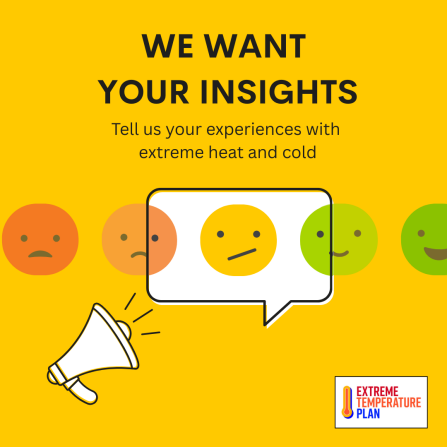
Participate in the Erie County Extreme Temperatures Survey in order to help shape the county's understanding of how extreme heat and cold affect our community.
Let's Get Ready for Summer Heat: Resource from the Erie County Office of Health Equity to prepare for summer. Available printed in multiple languages.
Extreme Heat: Resource on extreme heat as well as signs and symptoms of heat-related illnesses to look out for.
Summer Health and Safety for Kids: Resource about heat safety tips for children.
Places to Stay Cool in Erie County: Resource for cooling centers and other places to cool down.
ReadyErie Preparedness App: App that enables Erie County to communicate with constituents about emergency events and alerts.
Extreme Temperature Plan: Erie County's collaboration with the University at Buffalo to identify risks and gaps, develop long and short term actions to reduce impact on the community, and update county protocols.
Erie County Community Organizations Active in Disaster (COAD): Collaborative network between Erie County, City of Buffalo, local non-profit organizations, transportations agencies, and New York State to coordinate preparedness and education activites around disasters.
The Erie County Low Income Program for Sustainable Energy (ECLIPSE): Program to reduce energy burden, promote energy efficiency, and increase access to renewable energy.
Community Forestry Partnership Project: Erie County was awarded a $5.2 million U.S. Department of Agriculture, Forest Service Urban and Community Forestry Grant through funding from the Federal Inflation Reduction Act. This resource enables you to learn about project updates or find ways to participate.
Land Use: Resource to learn about canopy cover and other land use in Erie County.
Resources at the University at Buffalo
Hydration, Exercise and Thermoregulation (HEAT) Laboratory: The HEAT Lab conducts research to improve the health and safety of workers, warfighters and athletes in extreme environments.
UB Regional Institute:UBRI has been working in the region with the School for over 30 years, pursuing public scholarship with community constituencies at the intersection of public policy, urban planning, urban design, architecture, and real estate development.
Other Resources

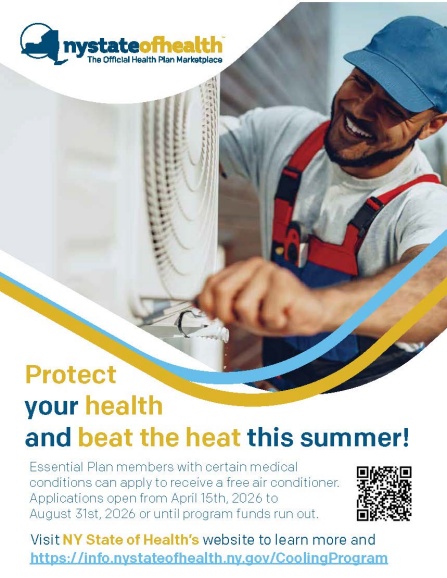
NY State of Health: Cooling Program
Essential Plan members with certain medical conditions may apply to receive a free air conditioner this summer. This program is accepting applications until August 31st or until its program funds run out. For more information, please see the attached flyer or visit the site here.
Critical environmental core temperature limits and heart rate thresholds across the adult age span (PSU HEAT Project)
Korey Stringer Institute: Center at the University of Connecticut in the Department of Kinesiology that has information on hydration and heat related illnesses.
Heat Health Programming or Resources?
Do you know of other heat health programming, resources, or opportunities not listed here? Submit them to ccche@buffalo.edu.