Lucia Leone’s interest in nutrition began in childhood, as she watched her mother—without a car and on a limited income—still manage to put healthy meals on the table. Now an associate professor of community health and health behavior at UB, Leone studies how to make nutritious eating achievable for families facing similar barriers. In this episode, she joins host David Hill to explain why simply expanding access to food is not enough to ensure nutrition security. She discusses community-based interventions like mobile produce vans and food prescription programs, and what her research reveals about why some efforts succeed while others fall short. She also challenges misconceptions about SNAP and the people it serves, and examines what it will take at the societal level to close the food gap for good.
Blue Ridge Institute for Medical Research rankings measure schools of medicine across the country, as well as their departments and other health sciences schools, such as dentistry, pharmacy, public health and nursing.
Five-year NIH-funded study will examine how early-life factors such as growth patterns and exposure to air pollution affect an important marker of biological aging from birth to young adulthood.
Smoking, vaping and dabbing all were associated with any past two-week binge drinking occurrence among high school seniors who used two or more cannabis products.
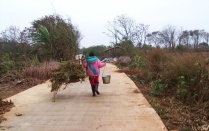
OGHI founder Arthur Goshin and his team are creating a community-based program in rural villages of India that focuses on children with a range of physical disabilities, and are developing training for workers who care for disabled children.
Through a partnership with the World Health Organization’s tropical diseases research program and the Uganda Ministry of Health, this study will help design a plan for a new intervention to treat malaria in children in Uganda.
Faculty in the School of Public Health and Health Professions are conducting research to reduce the burden of Chronic Illness and Non-Communicable Diseases.
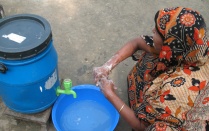
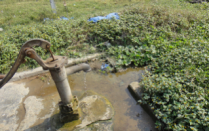
Pavani Kalluri Ram is leading studies to evaluate hand washing behavior change programs promote handwashing with soap to improve water, sanitation, and hygiene in communities in Kenya, South Sudan, Democratic Republic of Congo, Bangladesh, and Nepal.
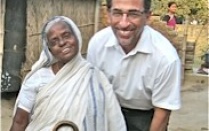
Projects include collaborating on the development and implementation of interventions to improve the health of elders in both the United States and India.
Working with the Child Health and Development Centre at Makerere University, Uganda, this study, led by OGHI founder Arthur Goshin, this study seeks to improve maternal health and birth weight, nutrition and growth in children.
Gary Giovino is a leading scholar on global tobacco use and is Associate Dean for Faculty Affairs in UB's School of Public Health and Health Professions and SUNY Distinguished Professor in the Community Health and Health Behavior department. He led the Global Adult Tobacco Survey and is engaged in ongoing research in this area.