Our Faculty

  • Faculty Spotlight

    Ghazala Saleem

    Public health undergraduate student Isaac Asante (right) helps Associate Professor Ghazala Saleem (left) calibrate computerized dynamic posturagraphy equipment in the Brain Function and Recovery Lab.

    Assistant Professor Ghazala Saleem EdD, MS, OTR/L, joined the UB occupational therapy faculty in 2020. The overarching focus of her Brain Function and Recovery Lab is to identify and refine rapid and objective detection methods and reliable and cost-effective treatment in brain injury that can be used even by those communities that have limited awareness of and access to appropriate clinical care.

    Three professional experiences that I had during my student years, as a licensed occupational therapist, and then as a research scientist trainee motivated me to get involved in the field of research and teaching. My first professional experience occurred when I was an undergraduate student and volunteering at a domestic violence center.

    During my work at the center, I was stunned by the lack of awareness about as well as limited resources in the community to provide evidence-based care to survivors of intimate partner violence (IPV). I was moved by the severity of psychosocial and somatic symptoms that many of these survivors were experiencing, and I knew that I need to understand these symptoms to fully assist the survivors with their recovery.

    Second, working as an occupational therapist with pediatric and adult patients with neurological disorders (e.g., stroke and traumatic brain injury), I realized that there is a scarcity of culturally sensitive and evidence-based treatment modalities in my profession. This absence of evidence is largely due to the limited number of occupational therapists who are trained as research scientists with expertise in clinical and translational research. I knew that by obtaining such training, I could positively impact my patients and help to advance the clinical rigor within my profession.

    My third experience occurred during my postdoctoral years, I worked with special populations (medically/socially vulnerable populations) of acquired brain injury, leading me to realize that evidence-based rehabilitative therapies are particularly scarce for such underserved populations. 

    My research is focused on generating evidence to guide differential diagnosis, treatment, and recovery in special populations with injury to the central nervous system. By doing this research, I hope to improve health outcomes by identifying and refining detection methods and treatment. I want to eventually implement culturally sensitive therapies in naturalistic settings so that these therapies are accessible to even those groups who have limited resources. 

    I am really proud of my students and my research team. My students are actively involved in all phases of research with me including data collection and data analysis. They have also co-authored several publications. I am fortunate to have an interdisciplinary research team involving students from all academic backgrounds. I am also excited about the amazing resources at my lab that UB has provided me to conduct my research successfully. 

  • Faculty Spotlight

    Hang Jin Jo

    Hang Jin Jo.

    Assistant Professor Hang Jin Jo, PhD,  focuses on studying how the brain controls movements in healthy people, as well as in those with neurological impairments such as spinal cord injury and stroke. 

    With my physical therapy educational background, I have been always intrigued by human movement, specifically how our brain controls movement. We move constantly during the day without even thinking about it most of the time. However, very simple movement such as moving a finger is achieved from such a complex process that involves brain, spinal cord, nerves, muscles and their neurophysiological interactions. I think understanding this process is fascinating, and it is a key to improve motor function in various neurological conditions.

    My current research approaches in spinal cord injury could have a direct impact on many people’s lives. Currently, there is no cure for spinal cord injury, and any research approaches and efforts have potential to lead to better treatment outcomes in spinal cord injury. I believe that I am contributing to this process by working in this field with the people with spinal cord injury and have impact on people that our lab works with.

    My research goal is to find or develop novel approaches to improve motor function in people with motor deficits. Our laboratory’s expertise is in using neurostimulation to achieve this goal.

    Once scientific challenges to the process determine an approach that could be more effective than current approaches, we face the next challenge of translating our findings to clinical settings, so that they can potentially be applied to a larger population, beyond our study participants.

    We just started a clinical trial in spinal cord injury at our laboratory. The trial uses a stimulation device applied to the spinal cord to increase motor output and aims to improve arm and hand movement in people after spinal cord injury.

    We are excited about the potential positive effect of this trial and are looking forward to working with more participants.

  • professional headshot.

    faculty spotlight

    How did you get involved in this field of study?

    Before joining the faculty at the University at Buffalo, I spent nearly a decade practicing in the community as a physical therapist specializing in neurologic and vestibular rehabilitation. During that time, I developed a concussion rehabilitation program and worked extensively with individuals recovering from both sport- and non-sport-related concussions.

    As my clinical experience grew, I began to notice a recurring disconnect between the symptoms my patients reported, such as dizziness, oculomotor disturbances, autonomic dysfunction, and exercise intolerance, and how concussion was typically described in the scientific literature. Many of these presentations suggested involvement of the brainstem, yet this region was rarely discussed in concussion research at the time.

    These unanswered questions ultimately motivated me to pursue a PhD at UB, where I could gain the research training and support needed to bridge basic neuroscience and clinical practice. That experience shaped my current work as a clinician–scientist, focused on improving how we understand, assess, and treat individuals with concussion and other neurologic conditions.

    How does your research have real world impact?

    My research is intentionally designed to improve real-world clinical decision making and patient outcomes. I collaborate with interdisciplinary teams at UB and with colleagues across the United States and Canada to translate emerging evidence into practical tools that clinicians can use in everyday practice.

    Much of this work has focused on improving concussion management by helping providers adopt evidence-based examination and treatment approaches. In addition to peer-reviewed publications, I have contributed to the development of clinical guidelines and educational resources that support return to work after concussion and return to the classroom for college and university students.

    These efforts have led to national and regional presentations, public service announcements, and freely available resources aimed at helping individuals with brain injury safely return to the activities that matter most to them. By connecting research, education, and advocacy, my goal is to ensure that new knowledge meaningfully improves patient care rather than remaining confined to academic journals.

    What is surprising to you about the outcomes of your research or current developments in your field of study?

    One of the most surprising, and encouraging, developments in my field is how responsive concussion recovery can be when impairments are identified early and managed with targeted, active approaches. Recovery is far more modifiable than was once believed, particularly when care moves beyond passive rest and focuses on addressing specific physiologic and functional limitations.

    At the same time, I have been struck by how influential education is in shaping outcomes. Patients, students, and clinicians who understand what is happening and why are more confident, more engaged in care, and better positioned to make informed decisions throughout the recovery process.

    Together, these insights have reinforced my belief that effective clinical management of any condition depends not only on what we do, but on how thoughtfully we support clinicians in delivering clear, meaningful education that empowers patients to actively participate in their recovery.

    What at work are you currently proud of or excited about?

    I am excited about my current work focused on concussion in occupational settings, an area that has been historically underrepresented in research despite its high prevalence and societal cost. Through collaborative, funded projects, we are examining ways to improve recovery and return-to-work outcomes for injured workers using evidence-based, active rehabilitation approaches.

    I am also proud of the opportunity to connect my teaching, research, and clinical expertise with service to organizations beyond the university. Sharing knowledge through education, research collaboration, and professional service, and seeing that work translate into meaningful impact, is one of the most rewarding aspects of being a faculty member.

RS at a glance

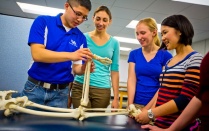
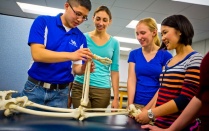
Rehabilitation science students in class.

Chair: Sue Ann Sisto, PT, MA, PhD, FACRM

Degrees Offered:

  • BS/MS in Occupational Therapy
  • DPT
  • PhD in Rehabilitation Science

Certificate Offered:

  • Assistive and Rehabilitation Technology

Number of Faculty:

  • 20 core faculty and 13 affiliated faculty