Despite Amtrak tragedy, rail travel remains safer than driving, says UB researcher

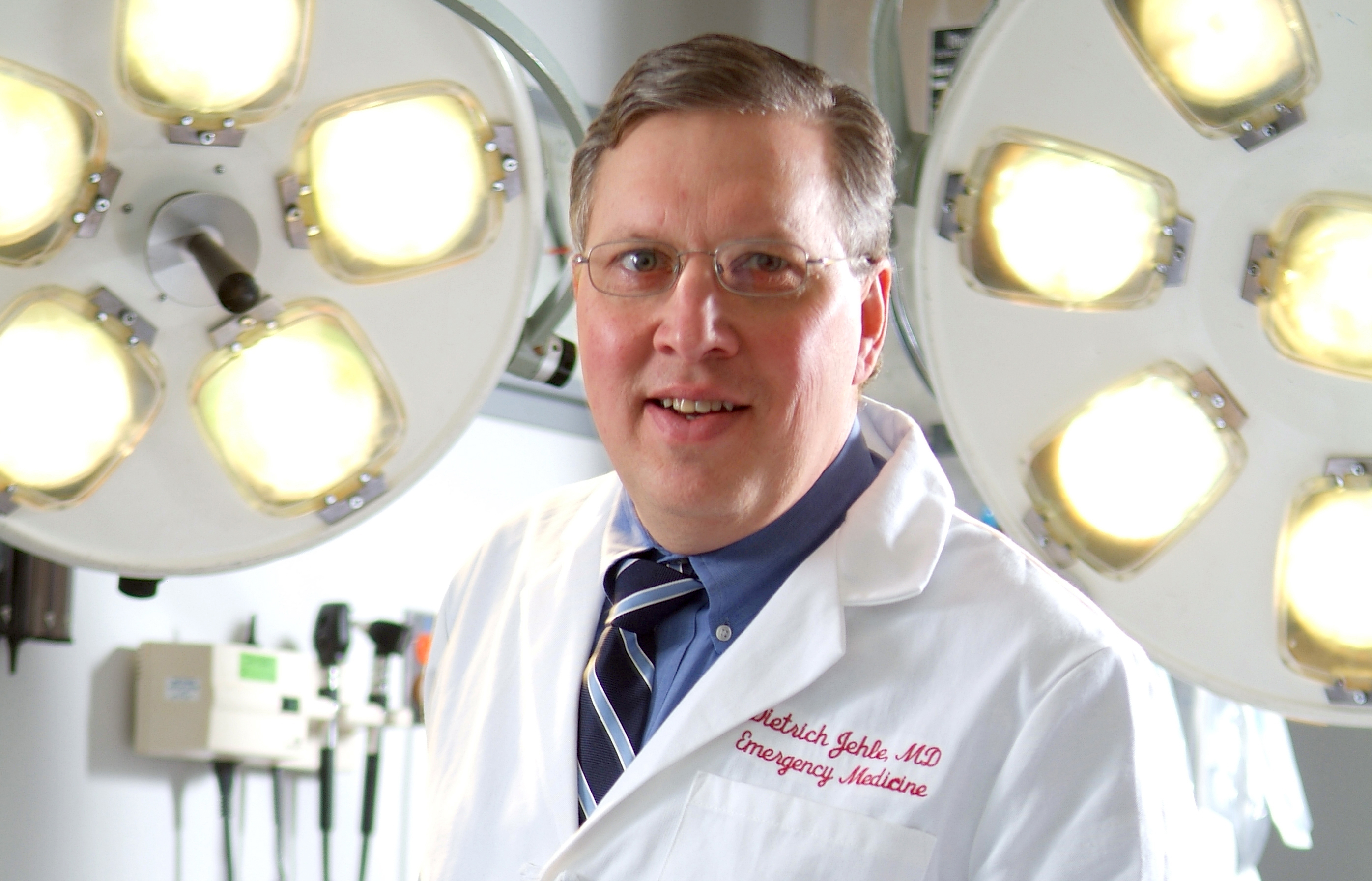
Dietrich Jehle, professor of emergency medicine.

Dietrich Jehle, MD, UB professor of emergency medicine, also is an attending physician in the Emergency Department at Erie County Medical Center.
Release Date: May 15, 2015 This content is archived.

Print
“Trains are approximately 50 times safer per passenger mile traveled than cars.”
Dietrich Jehle, MD, Professor
UB Department of Emergency Medicine

BUFFALO, N.Y. —Tuesday’s Amtrak derailment, which resulted in at least eight deaths and many injuries, is a tragic event, said Dietrich Jehle, MD, professor of emergency medicine at the University at Buffalo School of Medicine and Biomedical Sciences.

“However, while our immediate reaction is to suddenly think that trains are dangerous, it’s important to remember that train travel remains statistically much safer than driving,” he said. “Trains are approximately 50 times safer per passenger mile traveled than cars.”

That information came from a 2013 study Jehle cited, published in the journal, Research in Transportation Economics. The study found that for trains, there are 0.15 deaths per billion passenger miles as compared to 212 for motorcycles, 7.3 for standard vehicles, including passenger cars, 0.11 for buses and 0.07 for commercial airlines.

Jehle, who also is an attending physician in the Emergency Department at Erie County Medical Center, has long studied the variables that contribute to injuries sustained in car accidents.

Media Contact Information

Ellen Goldbaum
News Content Manager
Medicine
Tel: 716-645-4605
goldbaum@buffalo.edu

  • Dan Stapleton
    9/10/26
    Dan Stapleton, public health director of the Niagara (N.Y.) County Health Department has been named Leader of the Year by Leadership Niagara. He is an adjunct faculty member in SPHHP's Undergraduate Public Health program.
  • Danise Wilson
    9/10/26
    Danise Wilson has been elected chair of SUNY Erie Community College's Board of Trustees through 2022.
  • Catherine Callahan
    9/10/26
    Catherine Callahan recently published a co-first author article in the Journal of National Cancer Institute titled “Serum concentrations of per- and polyfluoroalkyl substances and risk of renal cell carcinoma.”
  • Summer Davis
    9/10/26
    Summer Davis was selected by the Alpha Eta Society (the national honor society for allied health professionals) to receive the Exceptional Professional Service Award. 
  • Marcelo Araujo
    9/10/26
    Marcelo Araujo recently published a report in The Journal of the American Dental Association titled "Estimating COVID-19 prevalence and infection control practices among US dentists." 
  • Dana Grady
    9/10/26
    Dana, an occupational therapist at St. Peter's Hospital, recently implemented a new post-cardiac surgery program called "Keep Your Move in the Tube, developed by Baylor University. 
  • Jane Moore
    9/10/26
    Jane Moore has created a comprehensive feeding program in collaboration with GI, nutritionists, behavior therapists and occupational therapists that specialize in feeding. 
  • Jacqueline Mix
    9/10/26
    A paper authored by alumna Jacqueline Mix was included recently in the American Association of Cancer Research's "Editors' Picks," a monthly collection of ten "must read" articles by the editors of AACR's journals. The paper--Assessing Impact of HPV Vaccination on Cervical Cancer Incidence among Women Aged 15–29 Years in the United States, 1999–2017: An Ecologic Study--appeared in the journal "Cancer Epidemiology, Biomarkers & Prevention."
  • Elisha Dunn-Georgiou
    9/10/26
    The new president and CEO of the Global Health Council is alumna Elisha Dunn-Georgiou. The council is the leading membership organization supporting and connecting advocates, implementers and stakeholders around global health priorities worldwide.
  • Jessica O'Neill
    9/10/26
    Alumna Jessica O'Neill has received a fellowship from the American Association for the Advancement of Science to USAID's Bureau of Humanitarian Assistance. The bureau provides life-saving humanitarian assistance—including food, water, shelter, emergency health care, sanitation and hygiene, and nutrition services—to the world’s most vulnerable and hardest-to-reach people.