“Traffic Light Diet” founder to receive national lifetime achievement award

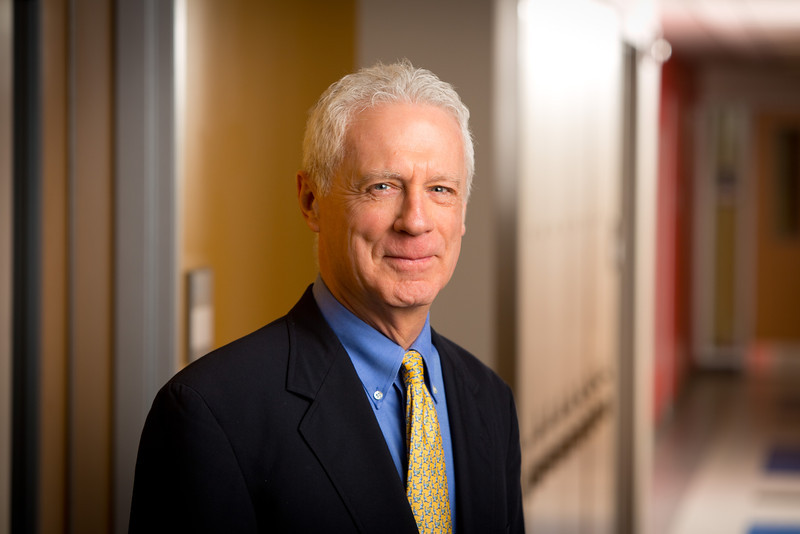
Leonard Epstein also has been named to the editorial board of JAMA Pediatrics, the highest impact journal in pediatrics
Release Date: May 31, 2017 This content is archived.
BUFFALO, N.Y. — Leonard H. Epstein, PhD, SUNY Distinguished Professor in the Jacobs School of Medicine and Biomedical Sciences at the University at Buffalo, has been selected to receive the Hoebel Prize for Creativity by the Society for the Study of Ingestive Behavior.
As the Hoebel Prize winner, Epstein has been invited to give a talk at the society’s annual meeting in July in Montreal. This national lifetime achievement award honors a members of the society at any career stage for an exceptional level of creativity and excellence in research on ingestive behavior. The award honors research that “constitutes a significant advance in our understanding of mechanisms controlling ingestive behavior” that potentially benefits society through development of methods that treat or prevent disorders related to ingestive behavior.
Epstein also was recently named to the editorial board of JAMA Pediatrics, the highest-ranking pediatric journal in the world and the oldest continuously published journal in the field.
One of the most renowned and productive investigators in the field of behavioral medicine and nutrition, Epstein is an internationally recognized expert on childhood weight control and family intervention. He takes an evidence-based approach to health behavior change as it relates to obesity, using the best available evidence from peer-reviewed scientific data.
The first researcher to demonstrate that childhood obesity treatment outcomes improve when television viewing is reduced, he developed and tested innovative approaches to reducing television watching that improved standard approaches to pediatric obesity treatment. He pioneered the use of lifestyle exercise as a component of obesity treatment, developing and testing programs that allow people to integrate into their lifestyle exercises that have similar calorie-burning benefits as standard aerobic exercise programs.
Epstein developed the nationally recognized Traffic Light Diet, which divides foods into categories according to the colors of a traffic signal. Widely used by families to instill healthy eating habits in overweight children, it is a component of the Buffalo Childhood Weight Control Program that Epstein developed and directs at UB. A study showed that half of the children who participated in this program had maintained a healthy weight after 10 years, far higher than the usual percentage — typically 10 percent or less.
Epstein currently has more than $22 million in funding at UB. One of his projects is an $8.8 million NIH grant designed to make successful, family-based weight-loss programs more accessible to those who need them, partly through the use of health counselors based in primary care offices.
Other current NIH-funded projects are geared toward preventing overeating in childhood by finding out which activities children find more appealing than eating. Epstein also has published groundbreaking studies on how behavioral techniques, such as episodic future-thinking, might help people with prediabetes overcome their focus on short-term rewards in order to develop healthier behaviors.
Epstein has been an early practitioner of translational research, which emphasizes engaging collaborative teams of investigators from diverse disciplines to more efficiently tackle complex health and research challenges. He is a co-principal investigator on the prestigious Clinical and Translational Science Award that the NIH awarded to the Buffalo Clinical and Translational Research Center in 2016. He also has directed “creative scientist” workshops that help educate researchers throughout UB and Western New York about the power of translational science.
A reviewer for numerous journals, such as PLOS One, Pediatrics and Obesity, he also has chaired NIH study sections, including those charged with reviewing applications to test behavioral interventions for such conditions as obesity, diabetes, cancer and cardiovascular disease. He served on the NIH’s advisory board for the Center for Scientific Review and chaired its Behavioral Medicine, Interventions and Outcomes study section.
A past-president of the American Psychological Association’s Division of Health Psychology, he has received the APA’s award for outstanding contributions to health psychology.
Epstein is division chief of behavioral medicine in the UB Department of Pediatrics in the Jacobs School of Medicine and Biomedical Sciences, and holds appointments in the departments of Community Health and Health Behavior, and Epidemiology and Environmental Health in the UB School of Public Health and Health Professions. He won the UB medical school’s 2012 Stockton Kimball Award in recognition of his outstanding research contributions and significant service to the university.
He lives with his family in Snyder.
Media Contact Information
Ellen Goldbaum
News Content Manager
Medicine
Tel: 716-645-4605
goldbaum@buffalo.edu