UB’s RENEW Institute awards seed grants to three projects

A cornfield in Iowa, part of the Upper Mississippi River Basin, which RENEW researchers will study. Credit: Wiki Commons.
Researchers will tackle climate change, chemical exposures among schoolchildren and developing more efficient semiconductors
Release Date: March 19, 2018 This content is archived.

.jpg)
BUFFALO, N.Y. — Three research projects have been selected to receive funding from the University at Buffalo’s RENEW Institute, which is dedicated to solving complex environmental problems.
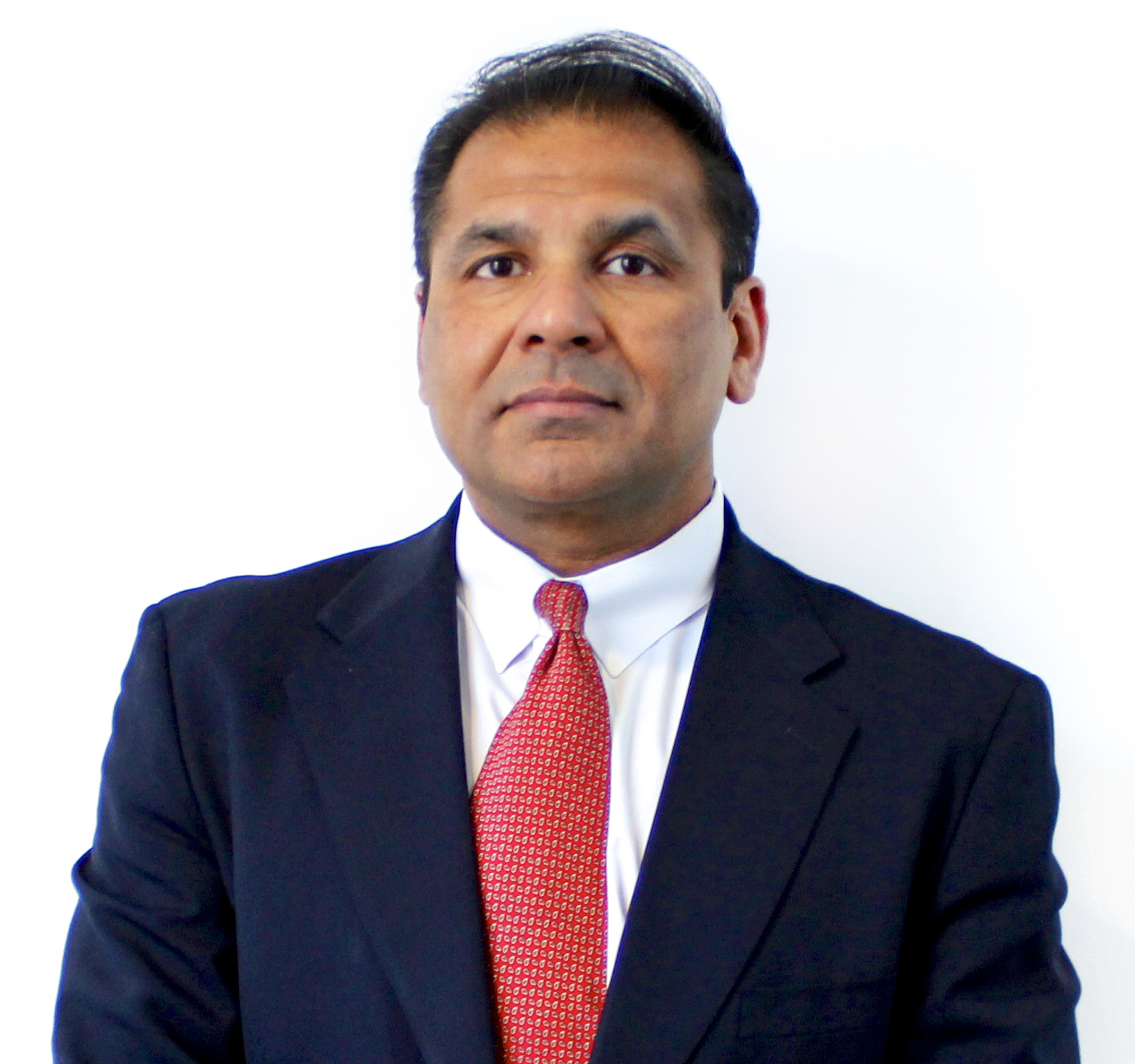
“These RENEW-funded projects address critical problems related to climate change, chemical exposure among school children, and the need for more efficient and higher performance semiconductors for renewable energy applications,” said Amit Goyal, PhD, director of RENEW, which stands for Research and Education in eNergy, Environment and Water. “We anticipate that each of these projects will lay the foundation for successful grant applications in the areas of energy, environment and water sustainability.”
UB’s RENEW Institute promotes interdisciplinary research that positions the university as a global leader in select areas of energy, environment and water sustainability. Its overarching goal is to advance these areas and lay the groundwork for a regenerative economy.
RENEW plans to accomplish this goal through research and education in five areas: next-generation materials and technologies for energy, environment and water; sustainable urban environments; freshwater coastal ecosystems and the blue economy; environmental exposures, genomes and health; and climate change and socio-economic impacts.
“These research projects, led by UB’s RENEW Institute, bring together interdisciplinary teams of investigators and develop innovative solutions to some of society’s most difficult environment and energy challenges,” said Venu Govindaraju, PhD, vice president for research and economic development.
RENEW’s interdisciplinary focus — involving the faculties of the School of Architecture and Planning, College of Arts and Sciences, School of Engineering and Applied Sciences, Law School, School of Management, School of Public Health and Health Professions and the Jacobs School of Medicine and Biomedical Sciences — is designed to foster new collaborations and produce new ideas.
The institute, which taps the leadership and vision of deans and over 100 faculty members at these seven UB schools and colleges, is in the process of hiring 15-20 new faculty members. The three projects, funded in response to the institute’s strategic investment initiative, are as follows:
Modeling the Upper Mississippi River Basin
The project — “Integrated Modeling of Climate Change and Human Influence on Land Use and Hydrology With Remote Sensing” — will assist farmers as well as watershed and forest managers in managing complex natural ecosystems.
Specifically, a multidisciplinary team will develop computer models that project how humans and climate change will affect the Upper Mississippi River Basin, an area that is home to 30 million people and major producers of corn, soybean and other cash crops. Researchers will use the model to simulate how different land use policies affect the basin from 2020-40. Results from the research will provide critical information for scientific understanding of sustainability, vulnerability, and resilience of land systems and their uses.
The project’s principal investigator is Le Wang, PhD, professor in the Department of Geography, and a member of UB’s National Center for Geographic Information and Analysis. Co-principal investigators are Susan Clark, PhD, research scientist at RENEW; Jessica Cao, PhD, assistant professor in the Department of Epidemiology and Environmental Health; and Zhenduo Zhu, PhD, assistant professor in the Department of Civil, Structural and Environmental Engineering.
Chemical exposures among school children in Uruguay
The project — “Scola-Exposome: Toward an Understanding of Patterns and Health Effects of Chemical Exposures Among Schoolchildren” — will leverage an ongoing research study on chemical exposure in Montevideo, Uruguay.
An interdisciplinary research team will test the feasibility of a wristband that gathers data that can be analyzed for the presence of more than 1,500 toxic chemicals. They will compare the results to traditional urine and blood samples, which they also will collect.
The project has the potential to help millions of children worldwide who do not reach their developmental potential due to poverty, and other disparities, including toxic chemical exposure. It also can improve the scientific community’s understanding of the complex relationships among environmental factors that prevent healthy neurodevelopment, an important public health goal.
The project’s principal investigator is Katarzyna Kordas, PhD, associate professor in the Department of Epidemiology and Environmental Health. Co-principal investigators are James Olson, PhD, UB Distinguished Professor in the Department of Pharmacology and Toxicology and Department of Epidemiology and Environmental Health; Diana Aga, PhD, the Henry M. Woodburn Professor of Chemistry; Elena Queirolo, PhD, research scientist at the Catholic University of Uruguay; Jeffrey Miecznikowski, PhD, associate professor in the Department of Biostatistics; Zia Ahmed, PhD, research associate professor with RENEW Institute.
Innovative wide-bandgap semiconductors
This project — “Innovative Approach to Integrate Two Dissimilar Wide-Bandgap Semiconductors Toward Efficient Energy Conversion Devices” — concerns wide-bandgap semiconductors.
Compared to circuits built with typical semiconductors, such as silicon or gallium arsenide, wide-bandgap semiconductors enable devices to operate at much higher voltages, frequencies and temperatures. They are used to make green and blue LEDs, lasers, military radars and more.
Two wide bandgap semiconductors of great interest for next-generation power electronics and optoelectronics applications are Gallium (III) oxide (β-Ga2O3) and diamond. The goal of this project is to bond two dissimilar, single-crystal wide-bandgap semiconductors (gallium oxide and diamond) without restrictions imposed by lattice constant matching in heteroepitaxial growth to develop a new class of highly efficient high power switches and transistors. The outcome of the research could spur advancements in electronics, optoelectronics and solar energy harvesting.
The project’s principal investigator is Jung-Hun Seo, PhD, assistant professor in the Department of Materials Design and Innovation. Co-principal investigators are Uttam Singisetti, PhD, associate professor in Department of Electrical Engineering, and Baishakhi Mazumder, PhD, assistant professor in the Department of Materials Design and Innovation.
Media Contact Information
Cory Nealon
Director of Media Relations
Engineering, Computer Science
Tel: 716-645-4614
cmnealon@buffalo.edu