UB researcher awarded $2.7 million NIH grant to study health of military personnel

Release Date: December 12, 2018 This content is archived.

Print
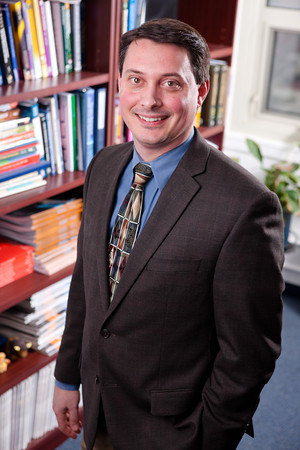
UB researcher Greg Homish.

Gregory Homish, PhD, associate chair and associate professor of community health and health behavior, University at Buffalo.

“The information obtained from this study can be used to better inform prevention and intervention programs aimed at improving health outcomes for our military service members and their families.”
Gregory Homish, associate chair and associate professor of community health and health behavior
University at Buffalo

BUFFALO, N.Y. — A University at Buffalo researcher who studies health outcomes among members of the military has received a $2.7 million grant from the National Institutes of Health to continue the research project.

Gregory Homish, associate chair and associate professor of community health and health behavior in UB’s School of Public Health and Health Professions, received the award through NIH’s National Institute on Drug Abuse. The funding runs through 2023. Combined with a previous $2.3 million NIH grant for the ongoing study, Homish has now received $5 million for the project.

“This renewal will allow us to examine two highly prevalent, yet understudied, experiences: soldiers who have never deployed and those who are separating from the military,” said Homish, PhD. “We will examine, over time, how these two factors impact changes in health for soldiers and their spouses.”

Homish’s collaborators on the NIH grant include Kenneth Leonard, director of UB’s Clinical and Research Institute on Addictions, and Bonnie Vest, research assistant professor of family medicine in the Jacobs School of Medicine and Biomedical Sciences at UB.

Substance abuse is one of the most common health problems among military personnel and tends to be even higher among reservists compared to active duty, researchers say. While research on the military has focused largely on the effects of deployment and combat, a significant proportion of reserve soldiers are never deployed.

Deployment is an important part of what’s known as “soldier identity.” As a result, non-deployment may contribute to feelings of guilt and decreased connectedness with one's unit, which, in turn, can increase risk for negative outcomes.

Homish’s recent research on this topic includes a study published in October showing that U.S. Army Reserve and National Guard soldiers who experience greater feelings of guilt and other negative emotions about never having been deployed are more likely to misuse alcohol.

Separation from the military can also be stressful for service members and their spouses, and may contribute to increased substance use. Homish and his colleagues have found evidence that former service members, compared to current service members, have higher rates of substance use and dependence.

“We are excited to be funded for an additional five years to investigate how social and environmental factors impact the health of soldiers and their spouses over time,” Homish said.

“The information obtained from this study can be used to better inform prevention and intervention programs aimed at improving health outcomes for our military service members and their families.”

Media Contact Information

David J. Hill
Editor, UBNow
Tel: 716-645-4651
davidhil@buffalo.edu

  • Dan Stapleton
    9/10/26
    Dan Stapleton, public health director of the Niagara (N.Y.) County Health Department has been named Leader of the Year by Leadership Niagara. He is an adjunct faculty member in SPHHP's Undergraduate Public Health program.
  • Danise Wilson
    9/10/26
    Danise Wilson has been elected chair of SUNY Erie Community College's Board of Trustees through 2022.
  • Catherine Callahan
    9/10/26
    Catherine Callahan recently published a co-first author article in the Journal of National Cancer Institute titled “Serum concentrations of per- and polyfluoroalkyl substances and risk of renal cell carcinoma.”
  • Summer Davis
    9/10/26
    Summer Davis was selected by the Alpha Eta Society (the national honor society for allied health professionals) to receive the Exceptional Professional Service Award. 
  • Marcelo Araujo
    9/10/26
    Marcelo Araujo recently published a report in The Journal of the American Dental Association titled "Estimating COVID-19 prevalence and infection control practices among US dentists." 
  • Dana Grady
    9/10/26
    Dana, an occupational therapist at St. Peter's Hospital, recently implemented a new post-cardiac surgery program called "Keep Your Move in the Tube, developed by Baylor University. 
  • Jane Moore
    9/10/26
    Jane Moore has created a comprehensive feeding program in collaboration with GI, nutritionists, behavior therapists and occupational therapists that specialize in feeding. 
  • Jacqueline Mix
    9/10/26
    A paper authored by alumna Jacqueline Mix was included recently in the American Association of Cancer Research's "Editors' Picks," a monthly collection of ten "must read" articles by the editors of AACR's journals. The paper--Assessing Impact of HPV Vaccination on Cervical Cancer Incidence among Women Aged 15–29 Years in the United States, 1999–2017: An Ecologic Study--appeared in the journal "Cancer Epidemiology, Biomarkers & Prevention."
  • Elisha Dunn-Georgiou
    9/10/26
    The new president and CEO of the Global Health Council is alumna Elisha Dunn-Georgiou. The council is the leading membership organization supporting and connecting advocates, implementers and stakeholders around global health priorities worldwide.
  • Jessica O'Neill
    9/10/26
    Alumna Jessica O'Neill has received a fellowship from the American Association for the Advancement of Science to USAID's Bureau of Humanitarian Assistance. The bureau provides life-saving humanitarian assistance—including food, water, shelter, emergency health care, sanitation and hygiene, and nutrition services—to the world’s most vulnerable and hardest-to-reach people.