UB research to assess connecting ADHD student’s special ed goals with daily classroom work

Release Date: January 10, 2019 This content is archived.

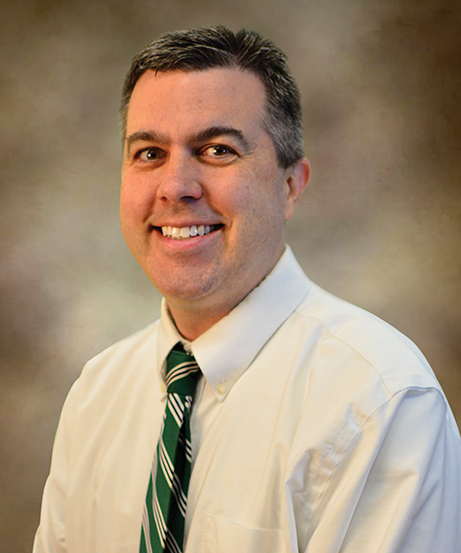
BUFFALO, N.Y. -- University at Buffalo faculty member Gregory Fabiano is continuing his nationally recognized work with ADHD children with a new study that will test how best to meet the special education goals of these children.
With a $3.3 million grant from the Institute of Education Sciences, Fabiano will work with co-investigator Jihnhee Yu, associate professor of biostatistics and director of UB’s Population Health Observatory, and William E. Pelham Jr. and Nicole Schatz of Florida International University to connect the educational goals of ADHD children’s special education programs with their daily work supervised by their classroom teachers.
“Children with ADHD are at considerable risk for school problems — low or failing grades, school dropout, suspensions,” says Fabiano, professor of counseling, school and educational psychology, and associate dean for interdisciplinary research in the Graduate School of Education.
“For this reason, many of them eventually end up enrolled in special education with schools.”
Students classified as needing special education acquire what is called an Individualized Education Program, or IEP. Even though they are considered special education, students with ADHD continue to spend most of their time in a regular classroom, Fabiano explains.
“In fact, there is not even a category of ‘ADHD’ for special education, meaning most children are placed in another special education category,” he says.
“This may mean it is difficult to provide consistent and effective supports for the students.”
For this grant, Fabiano and Yu reached back to earlier research in which they assessed the value of taking the goals and objectives in the students’ IEPs — academic programs that are typically evaluated monthly or yearly — and turning them into daily goals the child’s classroom teacher could measure and monitor each day.
As part of the previous study, the results of these IEP-based guidelines being used in the mainstream classrooms were sent home to the parent, and the parent provided a small home-based privilege if the child met the goals of the special education IEPs.
“This is actually a very common approach for treating ADHD in schools,” Fabiano says. “The difference in our study was that we were directly linking the regular classroom goals to those in the IEP.”
This small, low-cost change brought about “significant and meaningful improvements in behavior at the end of the school year for children who received it,” he says.
“These results occurred even when we compared the children to others who were also receiving special education, suggesting this small change was responsible for the improved school outcomes.”
The new grant from the Institute of Education Science will fund a larger study in collaboration with Florida International University to evaluate the effectiveness of linking the IEPs with students’ daily work in the classroom.
“If we can show that this approach results in better outcomes,” says Fabiano, “it is potentially a low-cost intervention that can be integrated into the school supports used for children with ADHD in special education.”
This low-cost intervention could potentially help the vast numbers of children diagnosed with ADHD. Fabiano says approximately 5 to 10 percent of the general education student population has ADHD.
Study participants will be students in kindergarten through sixth grade from schools in Western New York and South Florida. They will be randomly assigned to either a “school as usual” designation or a “daily report card” approach that links the IEP goals and objectives to regular classroom behavior.
Anyone interested in learning more about the project can call the study team at 716-829-2024
Yu’s primary role is to supervise data management, analysis and interpretation. An expert in research methods and statistical analysis, she will formulate and implement data analysis plans and help with publications. She will also coordinate and supervise the ways students are chosen for their respective groups.
“Especially for comparative effectiveness research, it is important that treatments are compared fairly using well-designed outcome variables that correctly reflect the treatment effects,” Yu says. “This randomized study is the first appropriately powered investigation of the efficacy of the fully developed DRC intervention and will provide a fair assessment of the effect size of the intervention regarding an improvement of the academic and social outcomes of children with ADHD.”
Media Contact Information
Charles Anzalone
News Content Manager
Educational Opportunity Center, Law,
Nursing, Honors College, Student Activities
Tel: 716-645-4600
anzalon@buffalo.edu