Rewiring Coordination: Spinal and Vestibulospinal Reflex Modulation in upper limb of Stroke Survivors

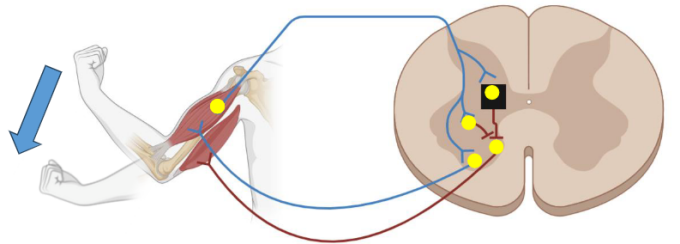
Rewiring Coordination: Spinal and Vestibulospinal Reflex Modulation in upper limb of Stroke Survivors
Lead Principal Investigator: Cristian Cuadra, PhD
Funding Agency: American Heart Association
Awarded: April 2025
Abstract: Stroke survivors frequently experience profound upper limb movement impairments, significantly limiting functional independence. These deficits are characterized by pathological flexor synergy, increased spinal excitability, and spasticity, which disrupt coordinated multi-joint movements and impede rehabilitation. Emerging evidence attributes these impairments to altered spinal mechanisms and brainstem pathway disinhibition, yet critical gaps remain in understanding their contributions to upper limb dysfunction. While post-stroke spinal excitability of individual muscles has been extensively studied, little is known about the role of heteronymous reflex interactions and vestibulospinal reflexes (VSR) in the upper limb muscles affected by the pathological flexor synergy. This study aims to characterize, for the first time, the role of disrupted heteronymous spinal and VSR interactions in upper limb movement dysfunction post-stroke. Specifically, we will investigate heteronymous reflex interactions between the deltoid, biceps brachii, and flexor carpi radialis, and the modulation of VSR within these muscles using vestibular evoked myogenic potentials (VEMP). We hypothesize that altered heteronymous reflexes and VSR responses will correlate with the severity of sensorimotor dysfunction and spasticity in stroke survivors. This innovative approach integrates advanced neurophysiological assessments to identify biomarkers of spinal and bulbospinal dysfunction, providing a novel framework to guide neuromodulation-based rehabilitation strategies. This research has the potential to transform clinical interventions and improve outcomes for individuals recovering from stroke.